
Construction Site Power: Sizing a Generator for EPC and Rental Fleets
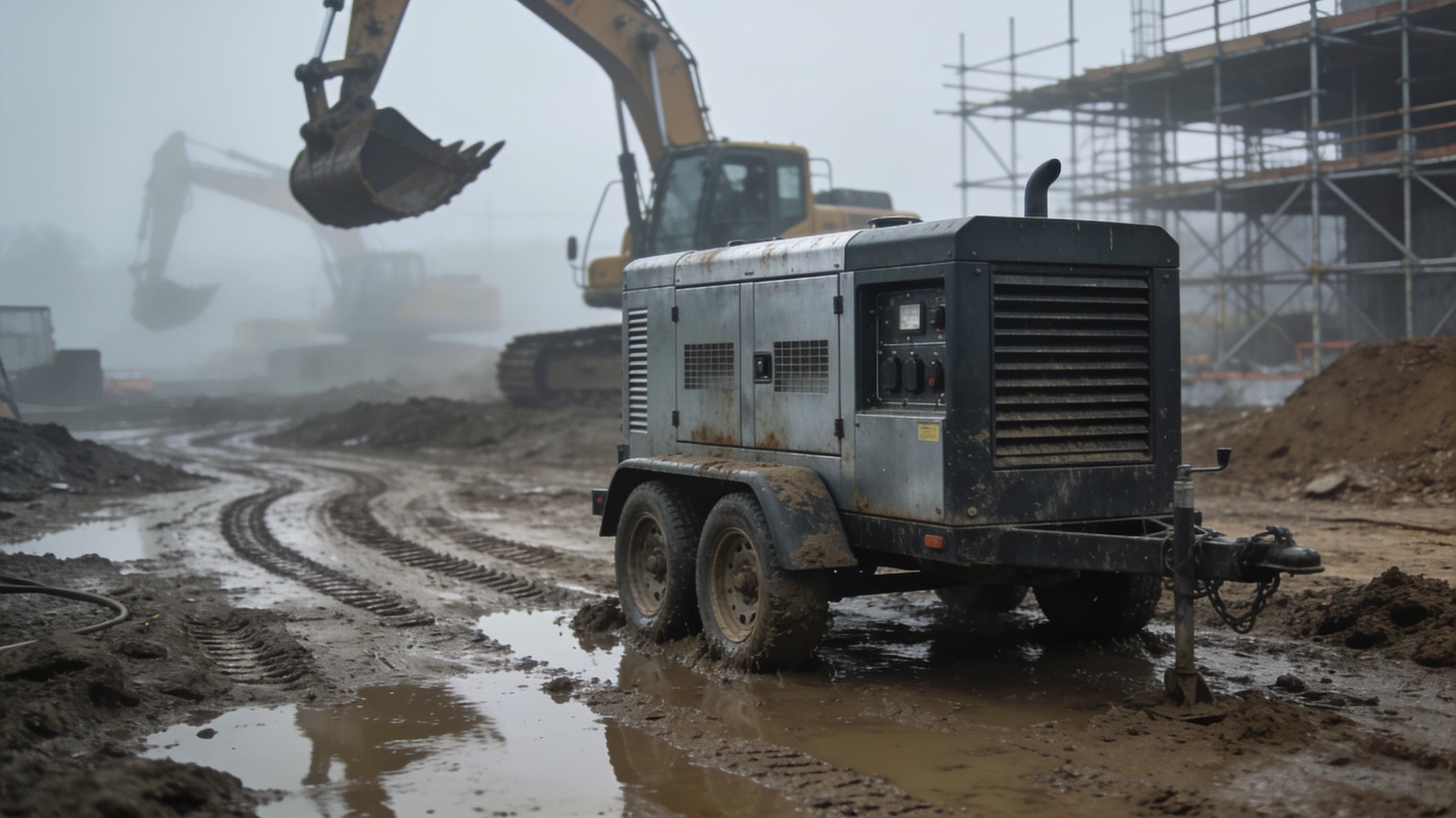
How to size a generator for a construction or EPC site: mobile and trailer-mounted sets, fast transfer for tools, and the load swings that decide the band.
Most construction and EPC sites need a mobile or trailer-mounted set that moves with the work, starts tools fast and rides the load swings of welders, compressors and crane lifts. Size on the largest motor start plus the running total, then plan for moves rather than a fixed plant room. See the full diesel range for the bands these sites usually fall into.
Four constraints a site puts on a set
A construction set is judged less on its nameplate and more on how it behaves on a moving, dirty, partly unattended site. Four constraints decide the build.
- Mobility. The set has to move when the work front moves. Trailer-mounted and skid sets with forklift pockets beat a fixed enclosure once the job shifts across the site.
- Load swings. Welders, compressors and crane or hoist motors draw hard starting current, then idle. The set must hold voltage through the swing, not just at steady running load.
- Dirt, weather and theft. Sites are open to dust, rain and opportunistic theft. A lockable, weather-sealed canopy with a secured control panel costs less than a stopped crew.
- Changing duration. A fit-out may run six weeks; a remote earthworks job may run two years. The duty you specify at enquiry should match the real run hours, not a guess.
Sizing step by step
List the load you actually run, then add the worst single start, then check the site. Do not size from the biggest single tool and hope the rest fits.
- 1Add the steady load. Lighting, small tools, site offices, compressors and pumps in running kW, per phase where the supply splits.
- 2Add the largest start. A crane, large compressor or batching motor sets the engine and alternator size through its starting kVA, often above the running total.
- 3Allow for welders and non-linear load. Arc and inverter welders and variable-speed drives distort the waveform; state them in the enquiry so the AVR is sized for it.
- 4Apply the site. High-altitude or hot sites cut output, exactly as on a mine. Use the same planning factors and link the set to the derating worked example when the site sits above 1,500 m.
- 5Pick the band and the build. Choose the mobile or trailer form in the band that covers the derated figure with margin, and confirm it survives the moves.
Typical site loads and the band they land in
These are planning positions, not a substitute for the load list. They show where each kind of site usually falls in the range.
| Site profile | Typical band | Why it lands there |
|---|---|---|
| Small tools, lighting, site office | 0 - 100 kW | Low steady load, small starts |
| Mixed trade package, small hoist | 100 - 200 kW | More running tools plus a lift start |
| Tower crane, large compressor, batching | 200 - 500 kW | One hard motor start dominates the set |
| Multiple cranes or a plant compound | 500 - 800 kW | Several large starts and high steady load |
Which build: open, silent or trailer
For a moving site, the form matters as much as the kW. KINBOOST builds trailer-mounted and mobile sets with lockable panels and a protected control box, because that is what an EPC schedule demands. See the construction solutions page for the enclosure line-up.
- Trailer or skid with forklift pockets. Move the set without a crane crew, and keep it on one pad while the work front advances.
- Silent canopy for urban or night work. Noise limits near occupied buildings or residences push you to an enclosed set with a rated dB(A) figure.
- Paralleling for the big lifts. Where two cranes run together, two paralleled sets give you N+1 and let one come down for service without stopping the job.
- Secured controls. A lockable panel and concealed connections reduce both theft and accidental shutdown by someone who should not be touching the set.
Questions buyers ask about site sets
Frequently asked questions
Open skid or enclosed set on a building site?
Enclosed for urban, night or secured sites; an open skid only where the set is sheltered, attended and clear of dust and theft. Noise and weather usually decide it before price does.
Do I need a bigger alternator for welders?
Often yes. Arc and inverter welders and VSD loads distort the waveform, and the alternator and AVR must hold voltage and frequency through that. List every welder and its duty in the enquiry.
How do I size for a crane that starts rarely?
The rare hard start still sets the engine and alternator size, because the voltage must not collapse when it does happen. Size to the largest start, then add the running load, not the other way round.
Should the set be stationary or trailer-mounted?
Trailer-mounted where the work front moves or where you run a fleet across jobs. Stationary only where the set serves one fixed location for the whole project.
Does altitude derating apply on a construction site?
Yes, wherever the site sits above roughly 1,500 m or runs hot seasons. Apply the same planning factors you would for a mine, and confirm the curve on the engine datasheet.
What should I put in the enquiry?
Running load by phase, the largest motor and its start method, any welders or VSD loads, site altitude and ambient, noise limit, and whether the set must move. Send it through the RFQ form and we return a sized proposal.