
KINBOOST
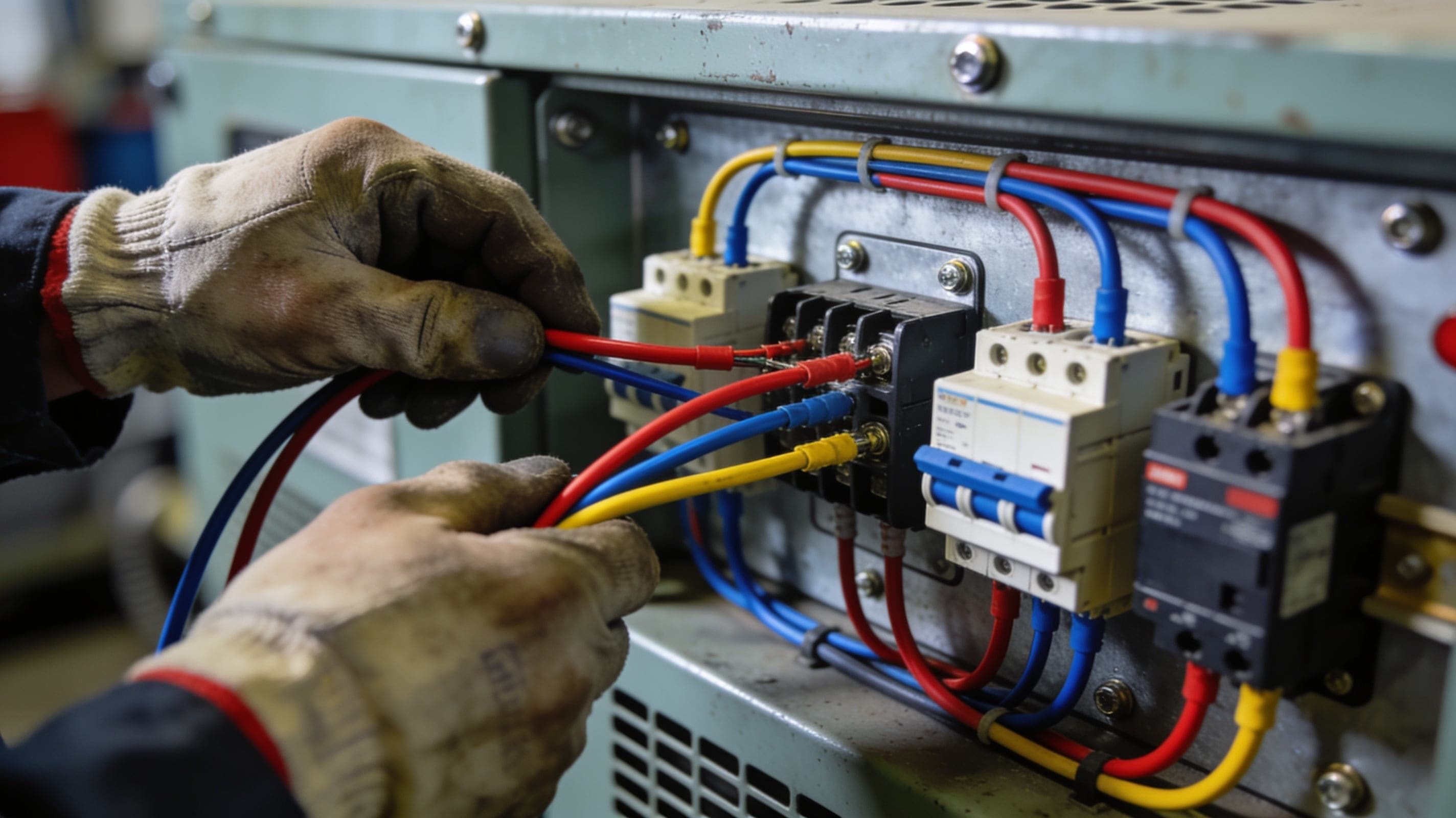
Technician wiring a generator control panel during commissioning

The machine outlives the invoice.

A generator is a twenty-year asset. What decides whether it stays on load is what happens after it lands: parts availability, documentation and someone who answers.

Three things keep a set running.

Parts you can actually get, answers you can reach, and a warranty that names who pays.

Spare parts

  • Wear parts stocked for ten years from delivery
  • Consumables kits quoted per service interval
  • Parts list keyed to your unit serial number
  • Dispatch within 72 hours of order confirmation
Technical support

  • Commissioning guidance by video call, in English or French
  • Controller and AVR parameter sheets supplied with the set
  • Fault diagnosis from your alarm log and photos
  • Operator training material for handover to site staff

Warranty

  • Eighteen months from bill of lading, or 1,500 running hours
  • Failures caused by the set are ours: part air-shipped, swap guided
  • Warranty certificate issued with the shipment documents
  • Extended cover available on request at contract stage

The warranty, read plainly.

Eighteen months from bill of lading or 1,500 running hours — and here is exactly what that does and does not mean.

What the warranty covers

  • Failures caused by the set are ours: the part is air-shipped and the swap is guided
  • Warranty certificate issued with the shipment documents
  • Eighteen months from bill of lading, or 1,500 running hours, whichever comes first
  • Extended cover available on request at contract stage

What it does not cover

  • Wear and consumable parts: filters, belts, lubricants, coolant, starting batteries
  • Damage from operation outside the manual, or use of non-genuine consumables
  • Unauthorized disassembly, modification or splicing of the set
  • Abnormal conditions: natural disaster, accident, abnormal supply voltage
  • Exceeding the warranty period or the running-hour limit

How a claim moves

  1. 1

    Report

    Send the unit serial number, a description of the fault, the controller alarm log and photos, and the current operating hours.

  2. 2

    Diagnose

    We retrieve the unit's filed parts list and load-bank record, identify the affected component, and return a diagnosis with the parts required.

  3. 3

    Dispatch

    A genuine part is dispatched within 72 hours of order confirmation; air freight is used for urgent cores.

  4. 4

    Restore

    Fit the part with our guided steps, or we arrange third-party inspection. The case is closed with a filed record.

Before you open the canopy.

A five-minute report gets a faster diagnosis than a dismantled set. Send these first.
Send these with the report

  • Unit serial number
  • Current operating hours
  • Controller alarm and fault codes
  • Photographs and a short video of the fault
  • Recent maintenance record
  • Load conditions at the time of failure

Training and handover

  • Commissioning guidance by video call, in English or French
  • Operator training material handed over to site staff
  • Controller and AVR parameter sheets supplied with the set
  • Fault-code interpretation and parameter-setting support
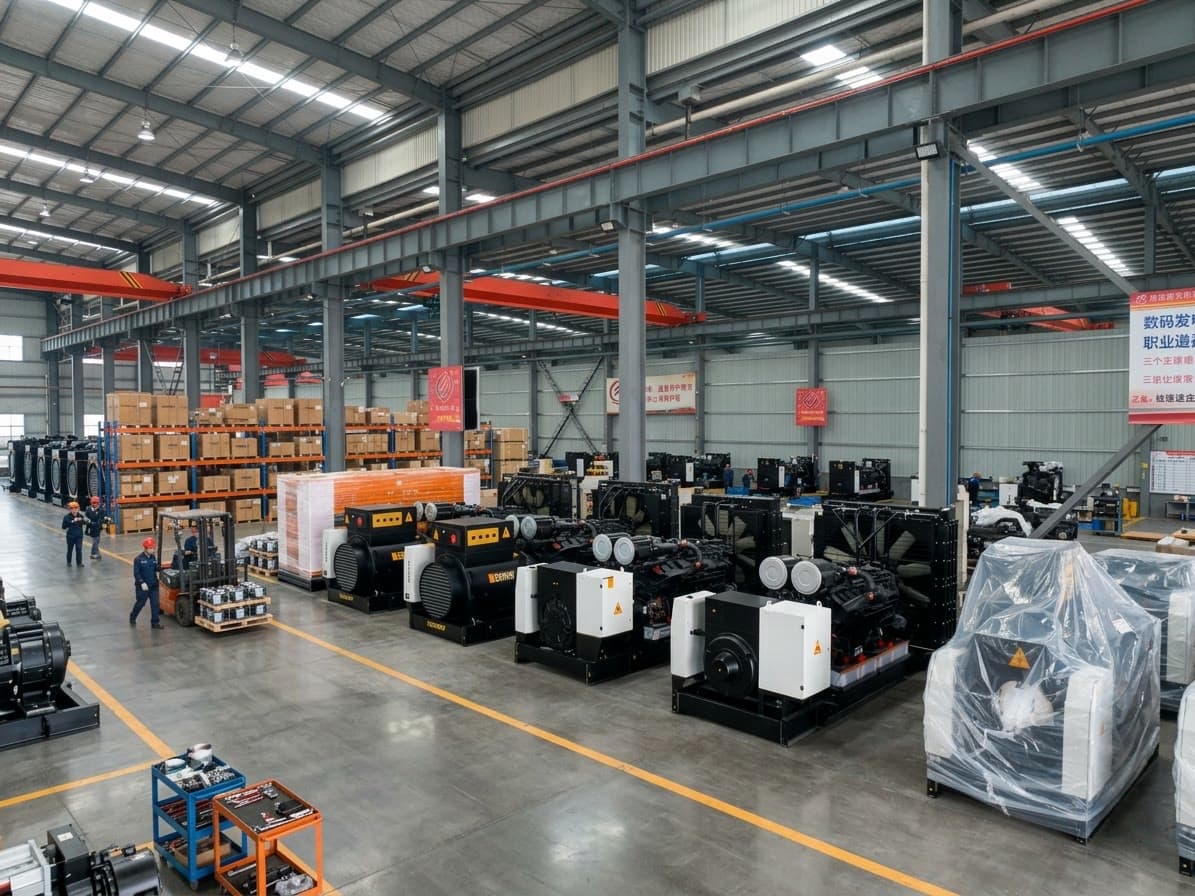
Packed generator sets and spare-part racks staged for dispatch at the KINBOOST warehouse

The parts are filed against the serial number.

Spare parts, firmware and the test report for every set are filed against its serial number, so a request that names the unit gets the right component without a photograph. Wear parts are stocked for ten years from delivery and dispatched within 72 hours of order confirmation.

The paperwork is prepared before the container is sealed.

Most African and Middle Eastern imports fail on documents, not on freight. We build the destination-specific pack during production, so nothing is waiting on a certificate when the vessel sails.
Every shipment

  • Commercial invoice and packing list
  • Bill of lading or airway bill
  • Certificate of origin (Form E / FTA as applicable)
  • Signed load-bank test report with unit serial number
  • Operation and maintenance manual
  • Electrical schematic and control wiring diagram
  • Spare parts list keyed to the unit serial number
  • Warranty certificate

Destination certificates

  • SONCAP: Product Certificate per model, Certificate per shipment
  • PVoC: Certificate of Conformity per shipment, inspection booked pre-sailing
  • SASO / SABER: conformity plus shipment certificate
  • GOST / EAC: customs union conformity for CIS destinations
  • CE declaration of conformity for EU-bound sets

On request

  • Third-party inspection (SGS, BV, Intertek) coordination
  • Witnessed factory acceptance test, in person or by video
  • Nameplate in your language and to your stated rating
  • Customs valuation support documents for your broker
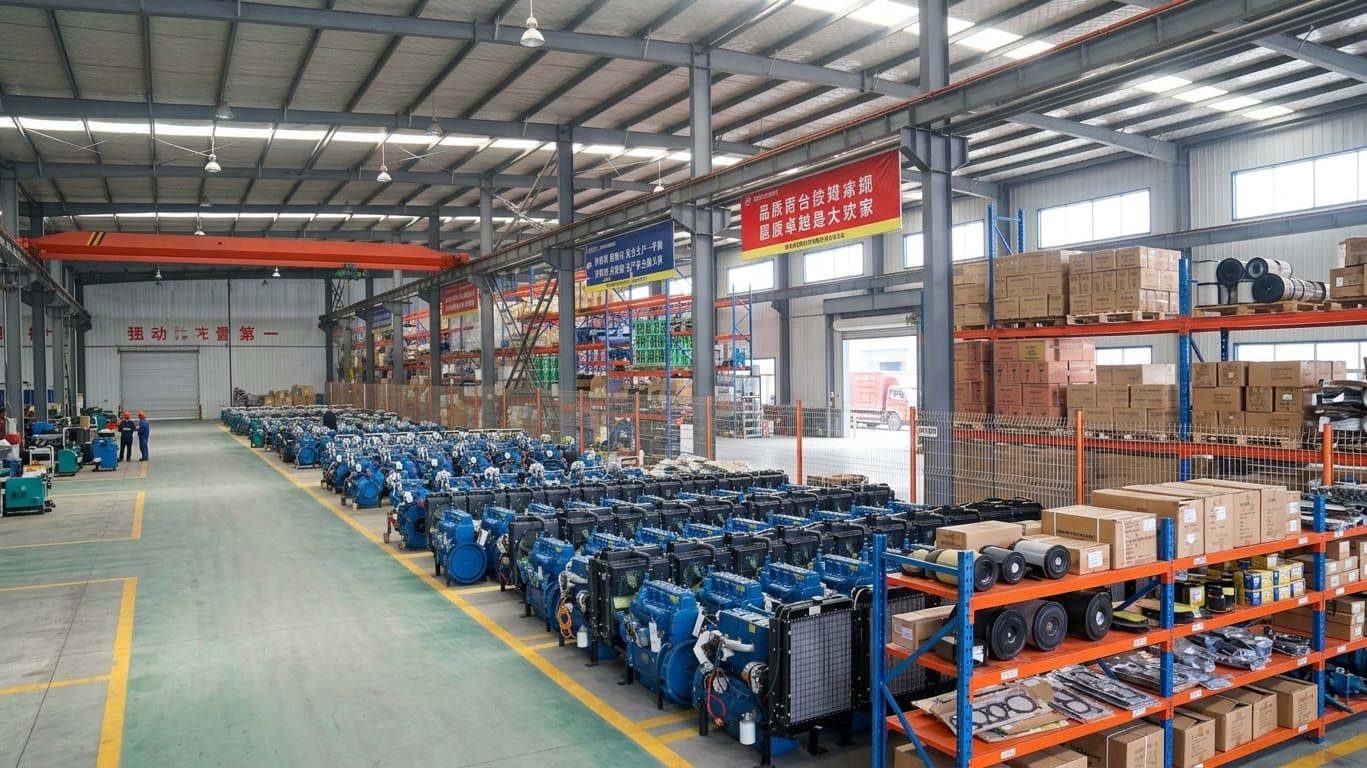
Export-crated generator sets staged for container loading with their document pack

Destination conformity requirements change. Tell us the country and port when you enquire and we will confirm the exact certificate set for your consignment before you commit to a vessel.

What your site takes away from the nameplate.

Hot, thin air carries less oxygen, so a set makes less power than the catalogue figure. This table is a planning guide for sizing, not a substitute for the derate curve in the formal datasheet.

Usable output against site altitudeTwo curves showing usable generator output falling with altitude, from 100 percent at sea level to 89.5 percent at 3,000 metres at 25 to 40 degrees Celsius ambient, and to 88.6 percent at 45 degrees Celsius ambient.Usable output25 to 40 °C ambient45 °C ambient100%96%92%88%sea level1,000 m1,500 m2,000 m3,000 mSite altitude89.5%at 3,000 m88.6%
Altitude factor
Sea level to 500 m1.00
1,000 m0.965
1,500 m0.948
2,000 m0.93
3,000 m0.895
Ambient factor
25 °C1.00
40 °C1.00
45 °C0.99
50 °C0.98

Worked example

  • A set rated 500 kW prime at reference conditions.
  • Site at 1,500 m altitude and 45 °C ambient.
  • Altitude factor 0.948, ambient factor 0.99.
  • Usable output is about 500 x 0.948 x 0.99, or 469 kW.

469 kW usable, against a 500 kW nameplate.

The factors above are a planning guide based on typical diesel genset behaviour at reference conditions of 25 C and 100 m. The formal derate curve for your selected engine platform is issued with the datasheet, and it is that curve, not this table, that governs the contract.

Before it ships, it holds full load for two hours.

Load-bank testing is where a specification either holds up or does not. We run every set at rated load for a minimum of two hours with voltage, frequency and fuel burn logged throughout, and the signed report travels with the machine under its own serial number.

If you cannot attend, we will run the test on video call with your engineer watching. Third-party inspection by SGS, BV or Intertek is arranged on request.

Before you trust any test video

Load-bank footage is worth watching closely, because it is the one part of a build you cannot verify from a photograph. Look for the resistive bank fans spinning up as load is applied in steps rather than all at once, the exhaust and radiator behaving under full load rather than at idle, and the operator watching the voltage and frequency trace settle before the hold period begins. Ask for the run to be captured with the control panel in frame so the logged values are readable, and ask that the signed report references the same serial number as the machine in the shot.

Parts and answers, after the invoice.

Send the unit serial number with your request. Every set we ship has its parts list filed against that number, so we can identify what you need without a photograph.

Operation, maintenance & spare parts

Read all guides