
Diesel vs Gas Generator Sets: Running Cost, Price and Which Wins
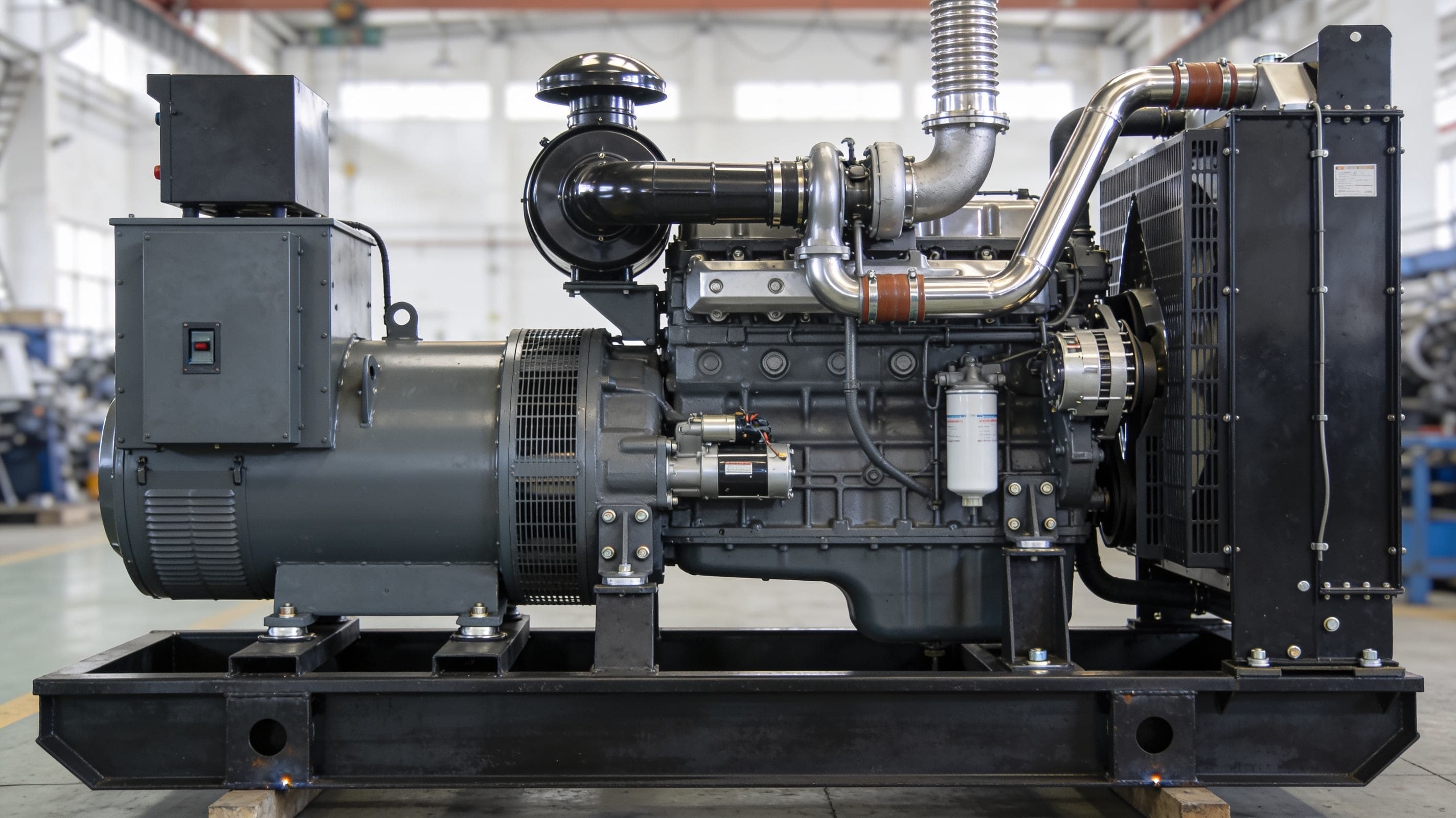
Diesel wins on reliability and fuel availability in almost every market. Gas wins on running cost where gas is cheap or free. The right choice is a fuel price times running hours calculation, not a brand preference.
Diesel and gas generator sets solve the same problem with different fuel, and the trade is simple. Diesel is more reliable and available almost everywhere, while gas is cheaper to run where gas is already on site. The winner is a fuel price multiplied by your running hours, not a preference, and the fuel consumption guide shows how to run the sum.
How the two engines differ
A diesel set compresses air and injects fuel; a gas set mixes gas with air and needs a spark or pilot ignition. That makes the gas engine cleaner and quieter at the source, but more dependent on a steady gas supply and a gas train. The dual-fuel option sits between them by blending the two in one engine.
| Factor | Diesel | Gas |
|---|---|---|
| Fuel availability | Nearly universal | Needs piped, bottled or on-site gas |
| Starting and load acceptance | Strong, proven | Depends on ignition and gas supply |
| Running cost | Higher where diesel is costly | Lower where gas is cheap |
| Emissions | More soot and NOx | Lower soot, lower NOx |
Purchase price
For the same rated output a gas set often costs more up front because of the gas train, ignition and emissions gear, while a diesel base is simpler and cheaper to build. The purchase gap narrows where the gas set replaces a complex diesel exhaust treatment, but the diesel set is usually the lower capital option.
Running cost is a fuel price times hours sum
The annual fuel bill is the energy you burn multiplied by the price you pay, multiplied by the hours you run. Where gas is free, such as flare or biogas already produced on site, the gas set can cut the bill dramatically. Where gas is expensive or intermittent, diesel stays cheaper. We do not publish a fixed saving figure because it depends entirely on your two numbers.
| Scenario | Diesel | Gas |
|---|---|---|
| Diesel at market price, 2000 h per year | Baseline cost | Higher capital, similar running |
| Piped gas below diesel energy price | Higher fuel bill | Lower fuel bill |
| Free on-site gas (flare, biogas) | Full fuel cost | Near zero fuel cost |
Send your gas price (or confirm it is free) and your running hours with the enquiry. The comparison is then arithmetic, not a claim, and the fuel guide gives the consumption basis to use.
Where each one wins
- Diesel: remote sites, unreliable gas supply, high duty, and anywhere fuel is easy to truck in
- Gas: sites with cheap or free gas, towns and hospitals near emission limits, and high running hours
- Dual-fuel: you want gas savings but cannot risk a gas interruption stopping the set
Dual-fuel as the middle option
A dual-fuel set blends diesel with gas in the chamber, substituting up to about 70 percent of the energy with gas while keeping diesel starting and load acceptance. It captures most of the gas saving with diesel reliability, and the dual-fuel guide covers the build and the limits.
What you need on site for gas
Gas needs a composition analysis, a supply pressure measured at the engine inlet, and gas detection and ventilation rated for the enclosure. The same requirements apply to pure gas and dual-fuel, and they are the gating items before a gas or dual-fuel set is specified.
Frequently asked questions
Is gas always cheaper to run?
No. Gas wins only where the gas price per unit of energy is below diesel, or where the gas is free on site. Run the fuel price times hours sum from the fuel guide for your case.
Why would I still choose diesel?
Because diesel is available almost everywhere, starts hard, and accepts load reliably, which matters on remote sites and where the gas supply is not steady. Reliability usually beats a small fuel saving.
What does dual-fuel cost versus pure gas?
Dual-fuel adds a diesel base and a gas train, so it sits between a pure diesel and a pure gas set on capital, while keeping diesel reliability. The dual-fuel note gives the detail.
Can I convert my diesel set to gas later?
Conversion is an engine specific modification with a gas train, controls and safety system, specified per engine family and site. It is best decided at order stage, not bolted on afterwards.
Do gas sets meet tighter emission limits?
Gas combustion produces less soot and NOx than diesel, so gas or dual-fuel helps near towns, hospitals and permit boundaries, with the exact reduction set by the gas and the load profile.