
Specifying Diesel Generators for a Rental Fleet: Portability, Telemetry and Turnaround
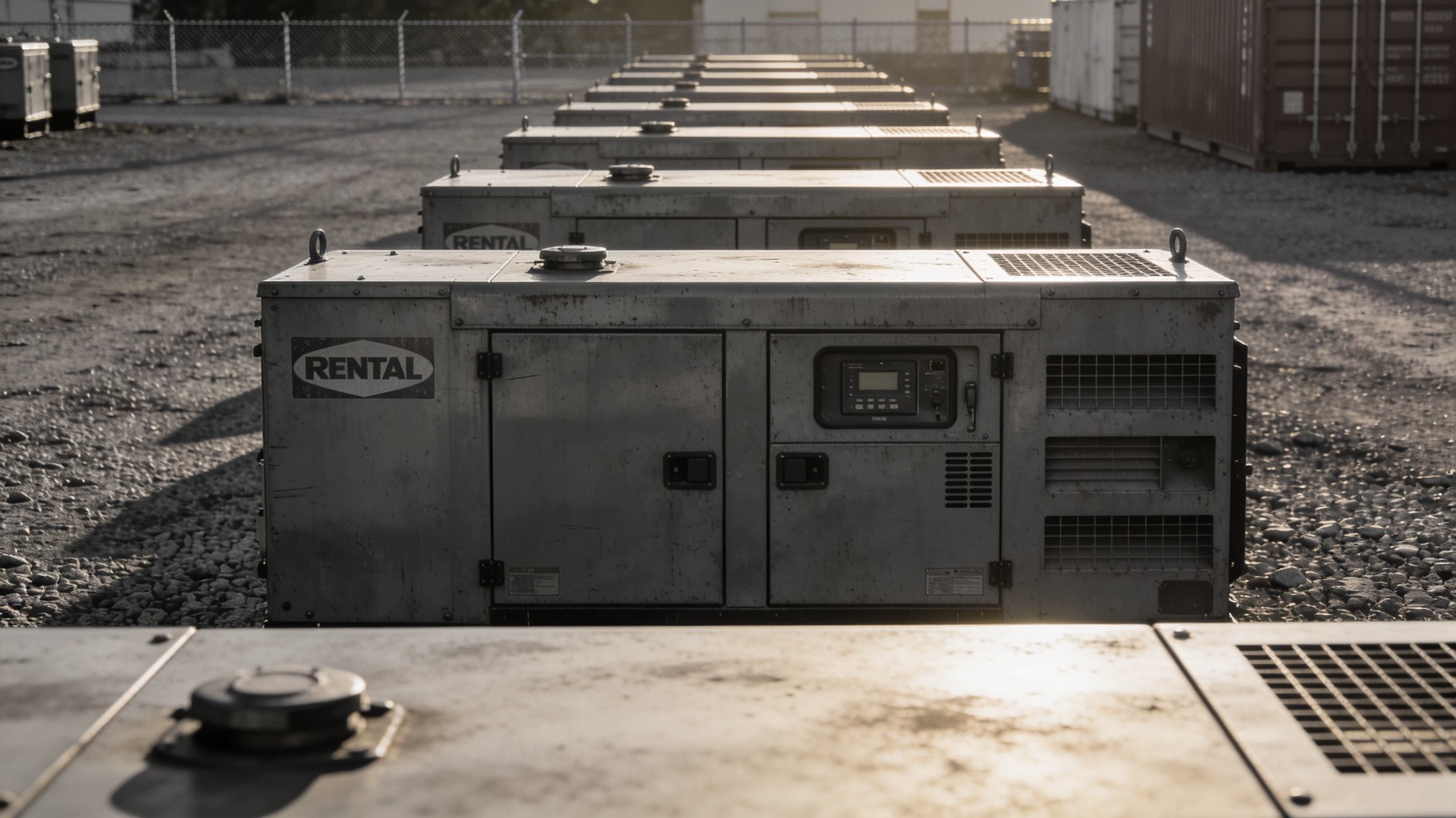
How to spec a rental generator fleet: trailer-mounted, lockable, telemetry-ready units in a small set of standard bands, so a set drops onto the next job with no rework and high utilisation.
A rental fleet lives on utilisation and turnaround: the sets must move fast, start every time, and report their own status between jobs. Specify trailer-mounted, lockable, telemetry-ready units in a small set of standard bands, so a set drops onto the next job with no rework. Start from the diesel range and keep the fleet in the bands your customers actually book.
Four constraints a rental fleet puts on a set
A fleet set is judged on uptime and reuse, not on a single perfect application. Four constraints decide the spec.
- Utilisation. A rental set runs far more hours per year than a fixed installation, often across different duties. Build for continuous duty and easy service, not a light standby life.
- Turnaround. The gap between one job ending and the next starting is profit or loss. Standardised connections, a quick-check panel and a drained, cleaned set get the unit back out fast.
- Mixed duty. The same set may back up a wedding one week and a compressor the next. Size for the common band and use paralleling or a larger unit for the rare peak, rather than over-specifying every unit.
- Fleet visibility. You cannot manage what you cannot see. Remote runtime, fuel, fault and location data keep utilisation high and theft low across units you do not watch in person.
Sizing step by step
Standardise the fleet first, then size each band to the work your customers actually book. Do not buy one-off sizes that sit between jobs.
- 1Pick the bands you rent most. Most fleets standardise on a small set of bands, often around the lower and mid range, because that is where most bookings fall.
- 2Add margin for unknown load. A rental set meets a customer you have not met, so size with margin and a robust alternator that survives a hard motor start it was not told about.
- 3Specify the common build. Trailer-mounted, lockable, weatherproof and with a standard connector suite, so any set fits any site with no custom work.
- 4Add telemetry. Runtime, fuel, fault and location from every unit let the yard dispatch the right set and act before a failure becomes a call-out.
- 5Plan service and spares. Standardise the engine and alternator across the fleet so one parts bin and one service routine cover most units.
Typical rental bands and where they go
These are planning positions for a general fleet. Confirm against the bookings you actually see before you set your inventory.
| Common rental use | Typical band | What drives it |
|---|---|---|
| Small residential or event backup | 10 - 100 kW | Light load, quiet sit |
| Event, market or small site | 100 - 200 kW | More load plus a stage or catering start |
| Construction or industrial hire | 200 - 500 kW | Tools, compressors, a crane start |
| Prime power or pooled sets | 500 - 800 kW | Long run with paralleling for peaks |
Which build a rental set needs
For a set that changes site weekly, the form and the controls matter as much as the kW. KINBOOST builds trailer-mounted, lockable and telemetry-ready sets in standard bands, because that is what a rental duty demands. See the rental and temporary power solutions page, and the construction sizing guide for the site detail.
- Trailer or skid with forklift pockets. Move the set without a crane crew and drop it on any pad.
- Lockable, weatherproof canopy. Survive outdoor hire, opportunistic theft and rough handling between jobs.
- Standard connector suite. One connection type across the fleet cuts on-site rework and the risk of a wrong lead.
- Telemetry-ready as standard. Fuel, runtime, fault and location from every unit keep the yard in control of assets it does not see.
Questions buyers ask about rental fleets
Frequently asked questions
How many bands should a rental fleet standardise on?
Few. Most general fleets run a small set of standard bands and cover peaks with paralleling or a larger unit, because standardisation beats a custom size that sits between jobs. Match the bands to the bookings you actually see.
Trailer-mounted or skid for hire stock?
Trailer-mounted for general hire, because the set moves between sites without a crane crew. Keep skid units only where the customer site is fixed for the whole hire.
Do rental sets need remote monitoring?
For a fleet, yes. Runtime, fuel, fault and location from every unit let the yard dispatch the right set and act before a failure becomes a call-out, and they cut theft on assets no one watches in person.
Should every unit be prime-rated?
The fleet should be built for continuous duty, because rental hours far exceed a fixed installation's. Size the common bands for the work customers actually book, not for a single light application.
How do I keep turnaround fast between jobs?
Standardise the build and connectors, keep a quick-check panel and a drained, cleaned set, and service to a routine. The gap between jobs is where the margin is, so remove every custom step.
What should I send for a fleet proposal?
Your typical booking mix, the bands you want to standardise on, whether trailer or skid, and the telemetry you need. Send it through the RFQ form and we return a standardised fleet plan.