
How to Size a Generator Set: A Step-by-Step Method for 20–2000 kW
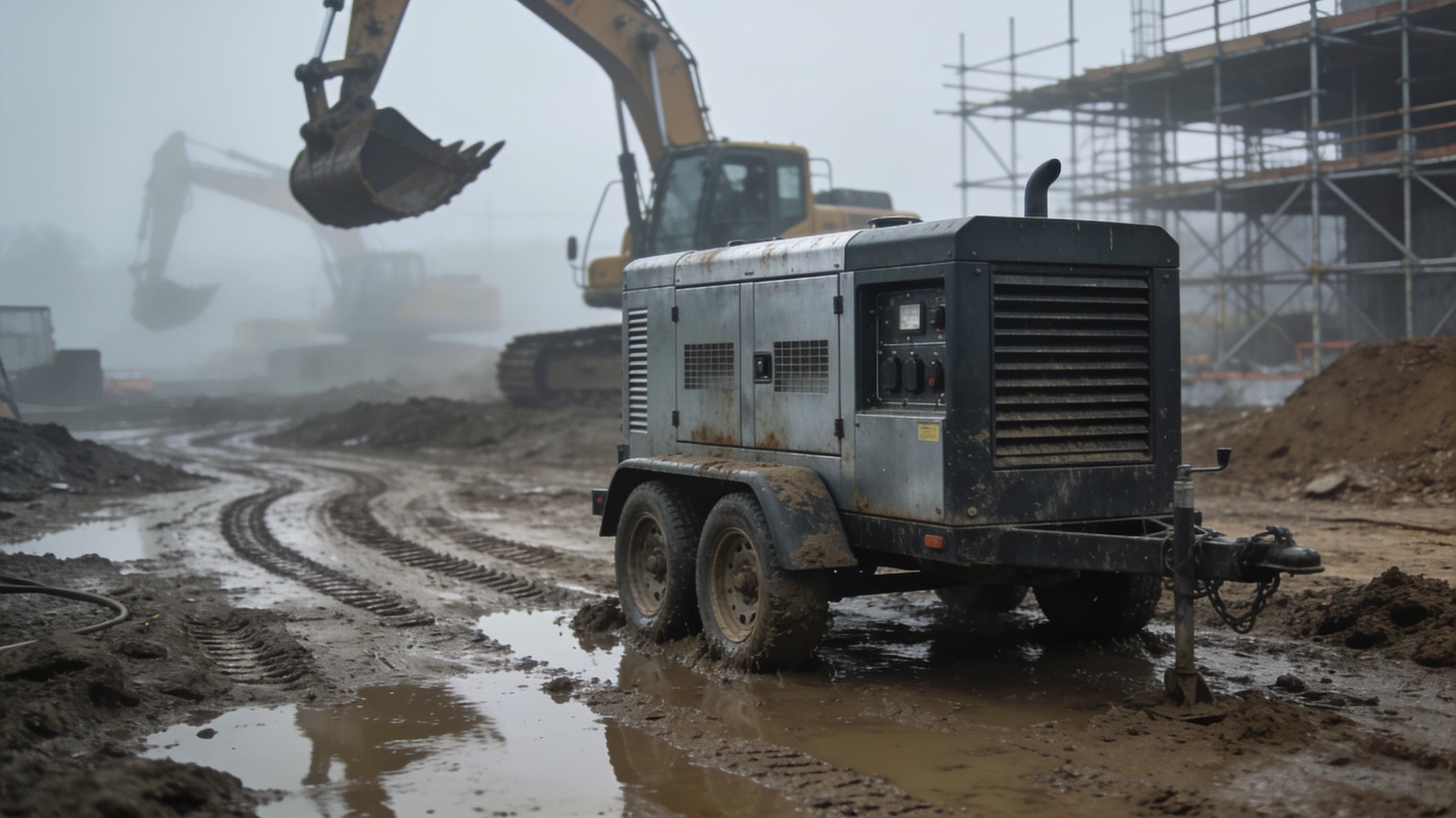
Size a generator from the load up: total the running kW, add the largest motor start, pick the duty rating, apply site derating, then choose the enclosure. A repeatable method for 20–2000 kW sets.
Start from the load, not a catalogue number. Add the running kW, add the largest motor's starting demand, pick the duty rating the site actually needs, then apply altitude and heat derating. The result is a nameplate kW with margin, and a set that holds the load instead of tripping on motor start. See the full diesel generator range for the bands this method lands in, and the buyer's process guide for turning the number into an order.
Start from the load, not the catalogue
The most expensive mistakes come from sizing to a number someone already has in mind, then discovering the real load is different. Build the number from the site instead. The steps below work the same way whether you are powering a clinic, a quarry or a data hall, and they line up with the rating definitions in ISO 8528.
- 1List the steady load. Add every continuous consumer in kW: motors, pumps, lighting, controls, and any heating or cooling that runs at the same time. Split per phase where the supply is three-phase and uneven.
- 2Add the largest motor to start. Starting current can be several times running current. The starting kVA, not the running kW, often sets the engine and alternator size.
- 3Pick the duty. Standby if the set only runs during outages; prime if it carries load alongside the grid; continuous if it is the only source of power. This single choice moves the rating by 20 to 25 percent.
- 4Apply site derating. Multiply the required output by the altitude and ambient factors for the site; the thinner and hotter the air, the less power the engine makes.
- 5Choose the enclosure. Open, silent, mobile or containerised, matched to noise, weather, dust and how the set gets serviced on site.
Pick the duty rating first
Before any kW number is final, decide the duty. The same engine carries three different nameplate figures depending on which rating you buy, and the cooling, service interval and warranty are all built around that choice. The three ratings come straight from ISO 8528-1.
| Rating | What it is for | Overload allowed |
|---|---|---|
| Standby (ESP) | Outage support only, limited annual hours | None |
| Prime (PRP) | Running alongside the grid, varying load | 10% for 1 hour in 12 |
| Continuous (COP) | The only source of power, constant load | None |
ISO 8528-1 rates every set at reference conditions: 25 °C ambient, 100 m altitude and 30% relative humidity. Any figure the engine maker publishes is stated there unless the row says otherwise, so a hot or high site always needs derating on top.
Apply site derating
Derating is not a penalty, it is physics: less oxygen in the air means less fuel burned means less power. The planning factors below are a guide for sizing; the engine manufacturer's published curve on the datasheet is the authority. A worked example lives in the derating guide, and a mine-site case in the mining sizing guide.
| Site condition | Factor | Effect |
|---|---|---|
| Sea level to 500 m | 1.00 | No correction needed |
| 1,500 m | 0.948 | Buy about 5% more nameplate |
| 2,000 m | 0.93 | Buy about 7% more nameplate |
| 3,000 m | 0.895 | Buy about 11% more nameplate |
| 45 °C ambient | 0.99 | Buy about 1% more nameplate |
Choose the enclosure and fuel
The enclosure decides whether the set survives the site. A silent canopy matters near homes, hospitals and camps; a containerised build matters in dust, heat and remote service; a trailer matters where the work front moves. Fuel is the other lever: diesel is simplest to site, while the dual-fuel option can cut running cost where gas is already on site.
- Open skid: lowest cost, only where sheltered and serviced on a known schedule.
- Silent canopy: for siting near people, with the dB rating matched to the local limit.
- Mobile or trailer: for construction and rental, road-legal and single-key service.
- Containerised: for dust, heat, remote sites and paralleling above roughly 1,200 kW.
Questions buyers ask about sizing
Frequently asked questions
Should I size to running load or starting load?
Size to the larger of the two. Most sites are set by the largest motor's starting kVA, which can be several times the running kW. An undersized alternator lets voltage sag on start and can trip the protection.
Why does the same engine show different kW?
Because the rating differs. Standby, prime and continuous ratings for one engine can differ by 20 to 25 percent. Always state the duty in the purchase order, not just the kW.
Do I really need to derate for a small altitude?
If the site is below 500 m and below 40 °C, the correction is negligible and you can skip it. Above that, apply it: 2,000 m alone takes about 7 percent off, and a hot season adds more.
How much margin should I leave?
Aim for the expected load to sit around 70 to 80 percent of the derated nameplate. That leaves headroom for motor starts, future growth and the fact that nameplate figures are measured at ideal conditions, not on your site.
Can one set cover standby and prime?
A prime-rated set can do standby duty safely, but a standby-rated set should not be run as prime. If the set may carry load for long stretches, specify prime so the cooling and warranty match the hours.
Where do I send the load list?
Send the loads, the duty, the destination port, and the site altitude and ambient temperature with your enquiry. A sized, datasheet-grade proposal comes back, not just a price.