
Cummins Generator Selection Guide: KTA19, QSK23 and QSX15 for Industrial and Standby Duty
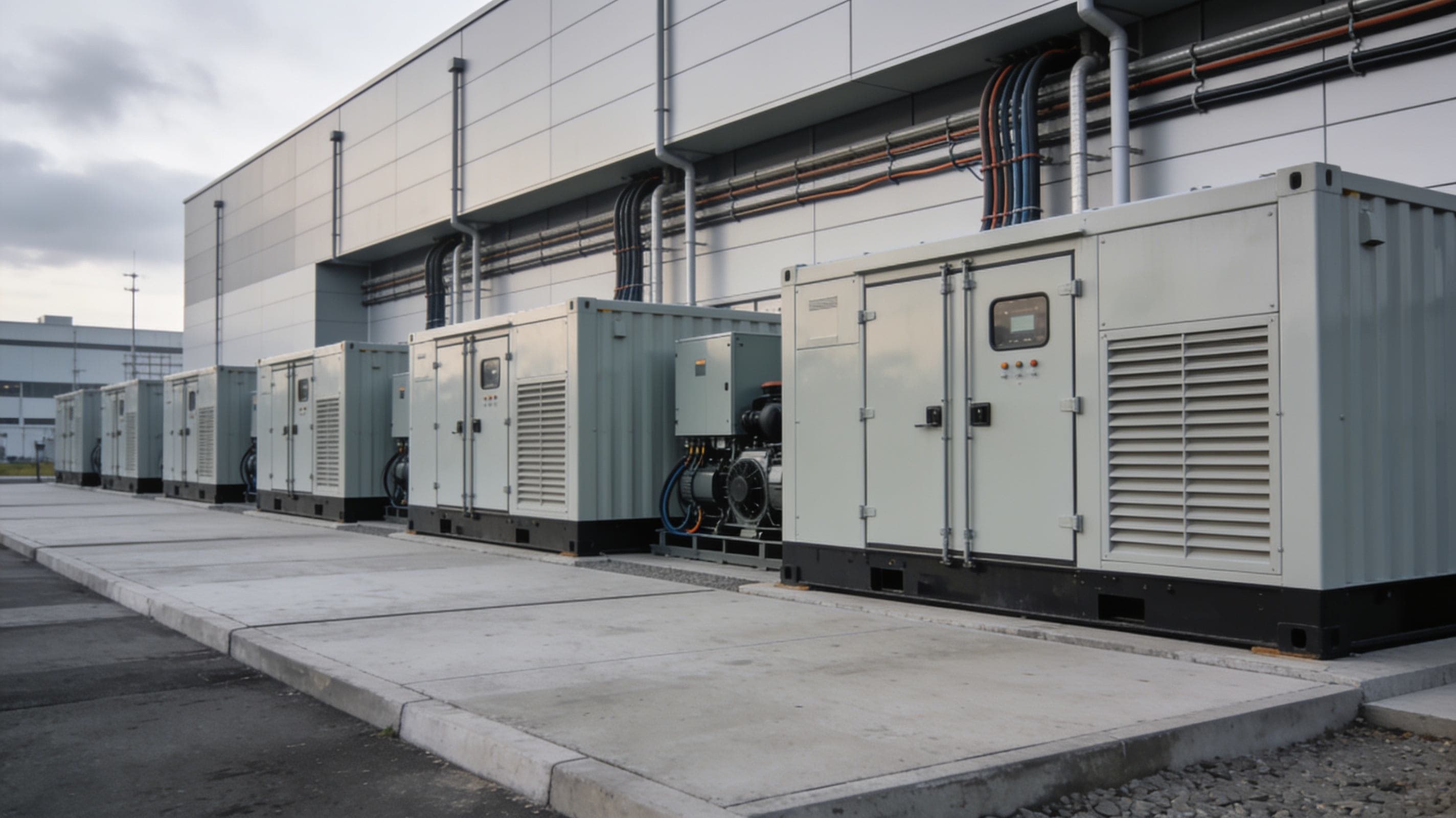
A practical way to choose between Cummins QSB, QSX15, KTA19, QSK23 and QSK38 families, with the duty, cooling and fuel questions that actually change the build.
Cummins covers almost the whole power range with six families you will meet repeatedly. Use the QSB and QSX15 families below roughly 500 kW, the KTA19 and QSK23 families from about 400 to 900 kW, and the QSK38 above 800 kW. Above 500 kW, fuel consumption at full load and the availability of parts in your country usually matter more than the engine badge. See the Perkins guide for a European-platform comparison in the same bands.
The Cummins families at a glance
Cummins is unusual among engine makers in that its families map fairly cleanly onto power bands, so the shortlist is usually short. The numbers below are indicative band positions for planning. The build sheet for your set is the authority, and it will name a specific variant and rating.
| Family | Configuration | Typical band | Strongest use |
|---|---|---|---|
| QSB | Inline 6, around 6.7 L | 100 - 250 kW | Small standby, telecom, compact sites with tight access |
| QSX15 | Inline 6, around 15 L | 200 - 500 kW | Prime power, rental fleets, moderate continuous running |
| KTA19 | Inline 6, around 19 L | 400 - 800 kW | Industrial standby, data centres, mid-size mining |
| QSK23 | Inline 6, around 23.9 L | 500 - 900 kW | Heavy prime power, large standby, harsh sites |
| QSK38 | V12, around 38.9 L | 800 - 2500 kW | Large industrial, multi-engine and parallel sets |
Which family for which duty
The families overlap, and that is where mistakes happen. QSK23 and KTA19 sit next to each other in the 500 to 800 kW band, and the right answer depends on hours and fuel burn rather than the label. The mining sizing guide shows how altitude and heat can move you up a family even when the running load looks the same. The same logic drives the construction site, telecom tower and rental fleet guides, which size a specific family to a specific job rather than to a catalogue band.
- Standby, low hours: QSB or QSX15 below 300 kW, KTA19 above it. A set that starts a few hundred times a year does not need a large hot-running engine.
- Prime power, long hours: QSX15 or KSK23 depending on band. Here the deciding number is fuel burn at 75 percent load, not peak rating.
- Continuous running, 24/7: go to the larger families, and size the cooling and fuel system for continuous duty rather than peak load.
Two sets of the same rated kW from different families can differ by 5 to 10 percent in fuel consumption at 75 percent load. Over 8,000 hours a year that difference is larger than most buyers expect. When you compare quotes, request a fuel-consumption line on the load-bank report.
What changes when it becomes a generator set
Above 500 kW the alternator and the cooling package stop being details. A Cummins engine that holds full load at sea level can lose 15 to 20 percent of its output on a site at altitude in a hot season, and the set will hold rated load only if the radiator was specified for that site rather than for the factory. Read the 60 Hz and derating guide for the altitude and temperature factors.
| Item | Why it matters above 500 kW | What to insist on |
|---|---|---|
| Radiator sizing | Decides whether rated load survives site temperature | Radiator duty quoted at site ambient and site altitude, not at sea level |
| Exhaust and silencer | Back-pressure reduces power and can be audible from far away | Exhaust back-pressure figure, and dB(A) at 7 m for the canopy version |
| Fuel tank and day tank | A set that runs long between services needs real autonomy | Litres between services at the stated duty, and tank material for the fuel |
| Vibration isolation | Long-running engines transmit into the base if mounted hard | Anti-vibration mounts and the baseframe construction |
| Parallel capability | Decides whether you can add modules later instead of replacing | Whether the controller and alternator support parallel operation, stated in writing |
Cummins against the alternatives
| Consideration | Cummins | Typical alternatives |
|---|---|---|
| Parts network | Very strong across Africa, the Middle East and Asia | Domestic Chinese brands are patchier outside their home market |
| Fuel burn at 75% load | Competitive in the large families, less so in small ones | Domestic platforms often lead on cost at low power, not always on burn |
| Emissions options | Stage V and Tier 4 variants exist across most families | Availability varies by family and by build date |
| Cost at 100-250 kW | Mid to high | Domestic platforms are usually cheaper in this band |
| Cost above 800 kW | Mid; the gap narrows against domestic platforms | Chinese platforms can be cost-competitive at 1000 kW and above |
What to put in the enquiry
| Field | Why it changes the quote |
|---|---|
| Running load and largest motor start | Sets running kW and starting kVA, which often decides the family |
| Duty: standby, prime or continuous | Changes the rating, the derating basis and the warranty |
| Hours per year | Above roughly 2,000 hours a year, fuel burn starts to matter more than price |
| Site altitude and hot-season ambient | Sets the derating; can move you a whole family up |
| Voltage and frequency | Determines alternator, AVR and cooling package |
| Destination country and port | Decides SONCAP, PVoC, SASO or no conformity scheme |
Questions buyers ask about Cummins sets
Frequently asked questions
Is QSK23 the same as KTA19?
No. They are different families with different fuel burn characteristics and different ratings. Across the 500 to 800 kW band the choice is usually decided by annual hours and fuel cost, not by preference.
Can a Cummins QSB run as prime power?
It can, but specify and derate it for prime duty rather than assuming. If it will run for thousands of hours a year, move up a family so the engine is not permanently near its peak.
How much does altitude affect a Cummins engine?
Roughly 3 to 4 percent per 1,000 m for a normally aspirated engine, on top of temperature derating. Ask for the derating table for the exact variant and confirm it against the nameplate.
Do Cummins generator sets support parallel operation?
Larger families generally can, with the right alternator, controller and coupling. It has to be stated at build time, because retrofitting parallel capability later is expensive.
Are Cummins parts available in West Africa?
Availability is generally good in major markets, but confirm the specific parts list for your model against local dealers before committing, particularly for the larger families.
How much does a canopy reduce the noise of a Cummins set?
A well-designed canopy typically brings a large open set down to around 70 dB(A) at 7 m. Ask for the figure on the canopy version you are buying, not the open-set number.