
Perkins Generator Selection Guide: 1100, 1300, 2000 and 4000 Series Explained
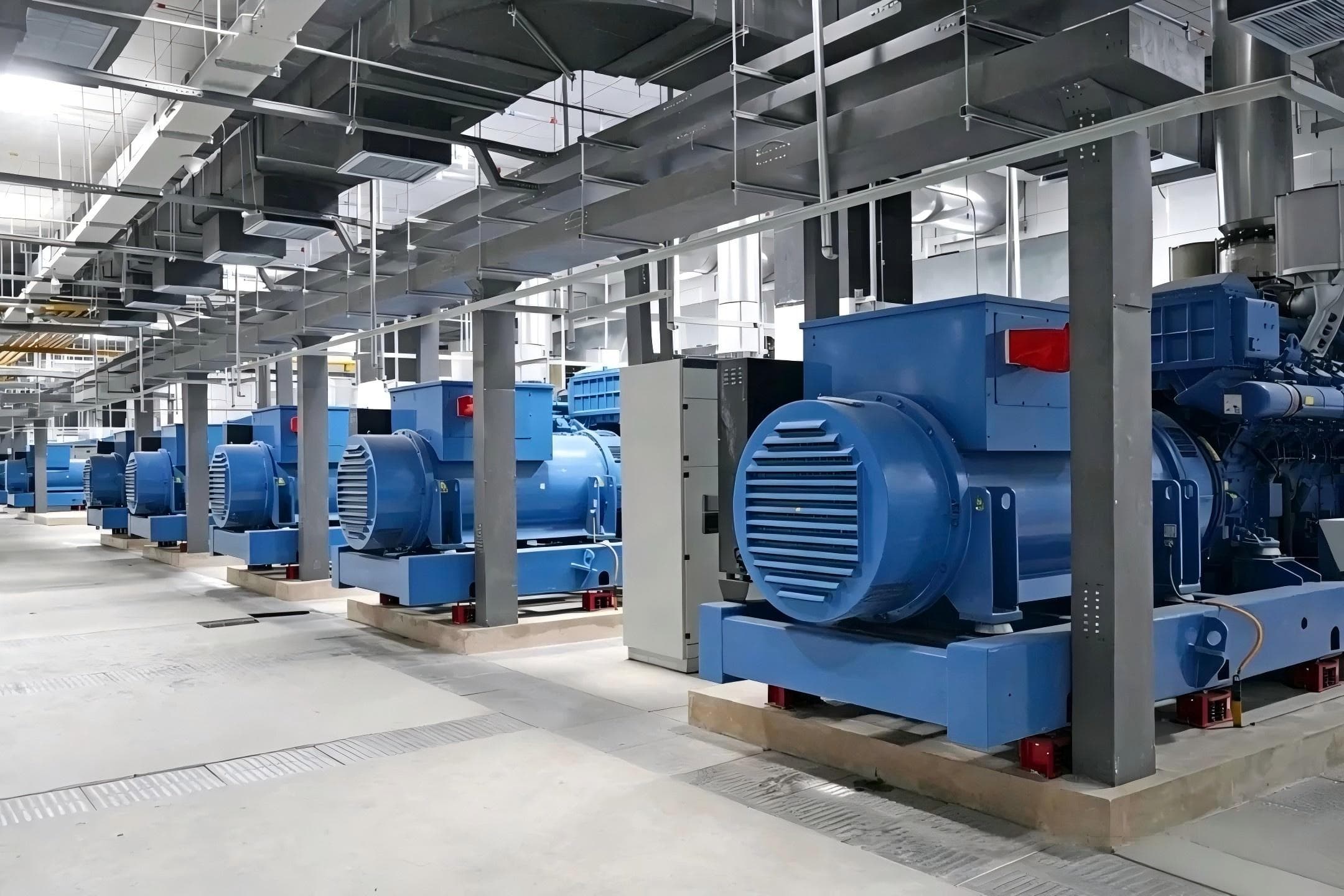
Compare Perkins 1100-4000 series by power band, duty and application, then see how KINBOOST builds them into open, silent and containerised sets.
For 10-200 kW standby, start with the Perkins 1100 series. Step up to the 1300 and 1500 series for prime power to roughly 500 kW. The 2000 and 4000 series cover 500 kW to 2 MW and beyond, where continuous duty, fuel consumption and emissions certification start to matter more than footprint. Compare with the Cummins selection guide for the same bands.
The Perkins range at a glance
Perkins builds four families that cover almost every generator set sold into Africa, the Middle East and Southeast Asia. The families differ far more than the badge suggests: displacement, cylinder count, emissions after-treatment and cooling all change with the series, and so does what each one is comfortable doing. The figures below are indicative band positions, not a substitute for the engine nameplate on the set you are actually buying.
| Series | Displacement | Cylinders | Typical band | Where it fits |
|---|---|---|---|---|
| 1100 | 1.6 - 6.2 L | 3 - 4 | 10 - 200 kW | Small standby, telecom, small retail, construction site backup |
| 1300 | 2.2 - 12.5 L | 4 - 6 | 60 - 500 kW | Prime power, rental fleets, small industrial standby |
| 1500 | 3.3 - 18 L | 6 - 8 | 230 - 750 kW | Continuous duty where the 1300 runs out of headroom |
| 2000 | 7 - 18 L | 6 - 8 | 200 - 1200 kW | Data centres, hospitals, mid-size mining and industry |
| 4000 | 11 - 32 L | 6 - 18 | 800 - 2500 kW+ | Heavy industrial, large mining, multi-engine and parallel sets |
Matching a platform to your duty
Most buying errors are not engine errors. They are duty errors: a set specified for standby ends up carrying production load for eighteen months a year, or a prime-rated set is bought where the standard is standby and the owner pays for capacity they never use. Pick the duty first, then the engine. If the site is remote or hot, also read the mine and quarry sizing guide before you settle on a band. For everyday sites, the construction site, hospital backup and telecom tower guides work the same engine families through their real duty, and the rental fleet guide covers sets that move between jobs.
- Standby: the set runs only during outages, usually 10 to 80 hours a year. Reliability and fast transfer matter, fuel consumption barely does. The 1100 and 1300 series cover this band well.
- Prime: the set carries the load whenever the grid is up. This is the standard for rental, telecom and remote industry. The 1300 and 1500 series are the usual answer, with fuel burn at 75 percent load becoming a running-cost line.
- Continuous: the set is the only source of power, 24 hours a day, seven days a week. Go to the 2000 and 4000 series. Continuous duty is a derating exercise as much as an equipment choice, and the engine, cooling and fuel system all change.
A standby-rated set and a prime-rated set built from the same family can differ by 20 to 25 percent in rated output. Specify the duty in the purchase order, not just the kW. The load-bank report is the fastest way to confirm the rating on the actual unit.
What changes once it becomes a generator set
The engine is roughly a third of a generator set's cost and a much smaller share of what makes it work. The alternator, the AVR, the controller, the cooling package and the enclosure decide whether the rated output survives contact with a real site.
| Component | What it decides | What to check on the quote |
|---|---|---|
| Alternator | Voltage regulation, short-circuit withstand, motor starting support | Alternator type and the number of starts per hour it is rated for |
| AVR | Steady-state voltage, recovery after a block load | Brand, and the settings actually loaded at factory test |
| Controller | Start logic, load transfer, protection, remote comms | Whether the model supports the monitoring you need; Modbus or dry contacts |
| Radiator and cooling | Whether the set holds rated load at site temperature | Radiator duty at the site ambient, not at sea level |
| Enclosure | Sound rating, weather, dust ingress, access | Canopy or container, with the acoustic figure stated in dB(A) at 7 m |
Perkins against the alternatives
There is no best engine brand. There is a best fit for a duty, a fuel and a service network in the country where the set will run. This comparison is written to help you match, not to rank.
| Consideration | Perkins | Typical alternatives |
|---|---|---|
| Global service network | Very strong in Europe and North America; patchier in some African markets | Varies by brand; some Chinese platforms have strong local coverage in their home markets |
| Cold start and altitude behaviour | Good low-temperature starting, well documented altitude derating | Model-specific; always request the derating table, not a rule of thumb |
| Fuel tolerance | Gas versions exist within the 2000 and 4000 families | Broader gas availability on some domestic Chinese platforms |
| Cost position | Mid to high | Chinese platforms are generally cheaper at the same output; the gap narrows at 800 kW and above |
| Parts and tooling | Globally interchangeable within a series | May need local sourcing, which affects downtime in remote sites |
What to put in the enquiry
A complete enquiry gets a sized proposal rather than a catalogue page. These are the fields that let a supplier quote the right set first time. Use the diesel generator sets page to see the enclosures and bands we build.
| Field | Why it changes the quote |
|---|---|
| Running load per phase, and the largest motor to start | Sets the running kW and the starting kVA, which often decides the engine size |
| Duty: standby, prime or continuous | Changes the rating, the derating basis and the warranty terms |
| Voltage and frequency: 400 V 50 Hz, 415 V 50 Hz, 380 V 60 Hz | Determines the alternator, the AVR settings and the cooling package |
| Site altitude and hot-season ambient | Sets the derating factor; can move you a whole power band |
| Transfer method: automatic, manual, or black-start | Decides the control package, contactor rating and commissioning scope |
| Destination country and port | Decides the conformity documents: SONCAP, PVoC, SASO or none |
Questions buyers ask about Perkins sets
Frequently asked questions
Is Perkins the same thing as Perryman or Perkins Engines?
Perkins Engines is a Cummins company. Perkins is a single brand with several engine families. If a quotation says Perkins, check which series it names, because the 1100 and the 4000 are very different machines.
Can a Perkins 1100 run continuously as prime power?
It can, but it should be specified and derated for it rather than assumed. Prime and continuous duty change the rating, the service intervals and the warranty. For genuinely continuous running, move up a series.
How much does altitude reduce a Perkins engine's output?
Roughly 3 to 4 percent per 1,000 m for a normally aspirated engine, on top of any temperature derating. The exact figure is engine-specific, so ask for the derating table for the model and confirm it against the engine nameplate.
Are Perkins engines available in gas versions?
Yes, mainly in the larger 2000 and 4000 families, and increasingly in the 1300. Availability depends on the exact variant, so state the fuel at enquiry stage rather than after the set is built.
Does the engine brand alone determine the set's noise level?
No. Canopy design, radiator size, exhaust routing and anti-vibration mounting decide most of it. Ask for a stated dB(A) at 7 m on an open set and on the canopy version.
Will any supplier build a set around a Perkins engine I already own?
Usually yes, provided the engine's condition and hours are documented. Expect a larger matched alternator and a controller suited to your protocol, and ask for the engine's test sheet before the build starts.